















Skip to content

Struggling project or no developer left? We take over your code, whatever the technology.

Node.js, React, PHP, Java or Python: the application runs badly, releases have stalled, and nobody really controls the code any more. We audit, secure, then pick up development where it stopped.

  • Node.js, React, PHP, Java, Python
  • Written audit before any commitment
  • You own the code
handover · projectbeforetaken over
  • Source code

    Git repository, versions

  • Server

    hosting, backups

  • Access

    admin, FTP, DNS, email

  • Documentation

    architecture, procedures

Everything inventoried, secured and documented

  • Pay on deliverybalance after delivery, 10–15% deposit
  • Reply within 2 hMonday to Friday, 9 am – 6 pm (GMT+1)
  • A real developerdirectly, no call centre
  • 20+ yearsmaintaining platforms

In short

Blue Digital takes over struggling software projects in any mainstream stack: Node.js and TypeScript, JavaScript, React and Next.js, PHP, Laravel and Symfony, Java and Spring Boot, Python. Every takeover starts with a written audit describing the real state of the code, the risks and the options (fix, partially rebuild or rewrite), with a fixed-price quote. The code and all access remain the client's property.

The project moves slower every month, and nobody quite knows why.

Every new feature takes three times longer than planned. One fix breaks something else. The developer who built it all has left, or stopped answering, and your team no longer dares touch the code for fear of taking everything down. It doesn't have to stay that way: difficult code can be read, measured and taken over, as long as you start by understanding it before changing it.

Cables, notes and USB keys in a mess on one side, sorted and labelled on the other: a project takeover

Does this sound familiar?

These are the situations we see most often when a company hands us a struggling project. None of them is beyond repair.

My site has this problem
  • deps

    Outdated dependencies nobody dares to update

    A framework stuck on an old version, known security flaws, updates that break the build. The longer you wait, the bigger the step.

  • bus factor

    One person knew the code, and they have left

    No documentation, no tests, technical choices never explained. The knowledge walked out with the developer.

  • regression

    Every fix breaks something else

    Without automated tests, nobody can tell what a change will affect. The team is fixing blind.

  • deploy

    Nobody dares to deploy any more

    Manual releases, steps only one person knows, no way to roll back. Releases get rarer, then stop.

  • prod

    Slowdowns and crashes in production

    Memory leaks, slow queries, processes restarting in a loop. Your users notice before you do.

  • access

    All access is in your former contractor's name

    Code repository, hosting, domain name, cloud accounts: you pay for them, but you control nothing.

The technologies we take over

Pick your stack: here is what we typically find, and what we actually do to get back in control.

Node.jsTypeScriptNestJSExpress

Node.js and TypeScript

APIs, back offices and real-time services in Node.js. It is quick to write, but a project without rules soon becomes fragile: cascading dependencies, unhandled errors, end-of-life Node.js versions.

What we often find

  • A Node.js version that no longer receives security patches
  • Vulnerable, abandoned or conflicting npm packages, an inconsistent lockfile
  • Unhandled promises that crash the process in production
  • APIs with no tests or documentation, configuration scattered through the code
  • Memory leaks and restart loops (PM2, containers)

What we do

  • Inventory of dependencies and versions, with a costed upgrade plan
  • Structured logging and error handling, to understand before fixing
  • Tests on critical routes before any change
  • Step-by-step Node.js upgrades on a copy of the environment
  • Reproducible deployment: Docker, continuous integration, rollback

Tools and versions

  • Node.js LTS
  • TypeScript
  • Express
  • NestJS
  • Fastify
  • PM2
  • Docker
  • Jest
  • Vitest

What we recover for you

Before writing a single line of code, we put the project back in your hands.

  • 01 · ✓

    Access and accounts

    Code repository, hosting, domain name, cloud accounts and third-party services transferred to your name.

  • 02 · ✓

    Source code and history

    A clean Git repository, with history available and branches identified.

  • 03 · ✓

    Environments

    Production, staging and local setup documented, so any developer can work on it.

  • 04 · ✓

    Deployment

    A reproducible release process, with the ability to roll back.

  • 05 · ✓

    Documentation

    Architecture, data flows, critical dependencies and procedures, written for you, not just for us.

  • 06 · ✓

    Costed technical debt

    A list of risks ranked by severity, with an effort estimate for each.

One team, several stacks

Struggling projects often mix technologies: a Node.js API, a React front end, a PHP back office. We take over the whole thing, not just one piece.

  • Node.js
  • TypeScript
  • JavaScript
  • React
  • Next.js
  • Vue.js
  • PHP
  • Laravel
  • Symfony
  • Java
  • Spring Boot
  • Python
  • Django
  • Docker
  • PostgreSQL
  • MongoDB

How we take over a struggling project

We promise nothing before reading the code. Every step produces a deliverable you keep, even if you decide to stop.

Blue Digital developer analysing the code and logs of a project being taken over
  1. 1

    Takeover audit

    We read the code, dependencies, hosting and access, and talk to your team or the former contractor where possible.

  2. 2

    Written report and options

    The real state of the project, ranked risks, and costed options: fix, partially rebuild or rewrite. You decide, with a fixed-price quote.

  3. 3

    Securing the project

    Access recovered, backups verified, urgent security patches applied, deployment made reliable.

  4. 4

    Development resumes

    Short iterations with a demo at every step. Blocked features move again, with no disruption for your users.

  5. 5

    Maintenance

    Updates, monitoring and improvements, at the pace you need.

What the takeover audit includes

  • Code review and architecture map
  • Inventory of dependencies, versions and known vulnerabilities
  • Check of access, hosting and backups
  • List of risks ranked by severity
  • Costed options: fix, partially rebuild or rewrite
  • Takeover plan with a fixed-price quote

How you pay

  1. 10–15%deposit to start, once you approve the quote.
  2. Balanceonly after a live demo: you see the result working before you pay.

Quoted after diagnosisPrice given after diagnosis, before any work starts.

Request a fix

Afterwards: monthly maintenance

Once the project is back on track, we can look after it every month so the technical debt doesn't build up again.

Get a quote
  • Security updates for dependencies
  • Error and performance monitoring
  • Regularly verified backups
  • Small improvements and fixes within an agreed volume
  • A technical contact who knows your code
  • Regular reviews of the project's health

Take over, rewrite or hire: what changes for you

Take over, rewrite or hire: what changes for you
CriterionTakeover by Blue DigitalRewrite everythingHire a developer
First improvementsFrom the securing phase, right after the auditOnce the new version shipsAfter recruiting and onboarding
RiskLimited: we keep what worksHigh: all behaviour has to be rebuiltDepends on one person, again
CostAudit, then fixed-price iterationsA full project to fundSalary, recruitment, onboarding time
Technologies coveredNode.js, React, PHP, Java, PythonThose of the new projectThose the new hire knows
ContinuityDocumented code, access in your nameNew debt if nothing else changesThe risk returns if they leave

Stores and platforms that keep running

A few of the sites built and maintained by the Blue Digital team.

  • www.miele.co.ma
    Miele Maroc website built by Blue Digital
    Miele MarocMagento store, premium home appliancesVisit the site
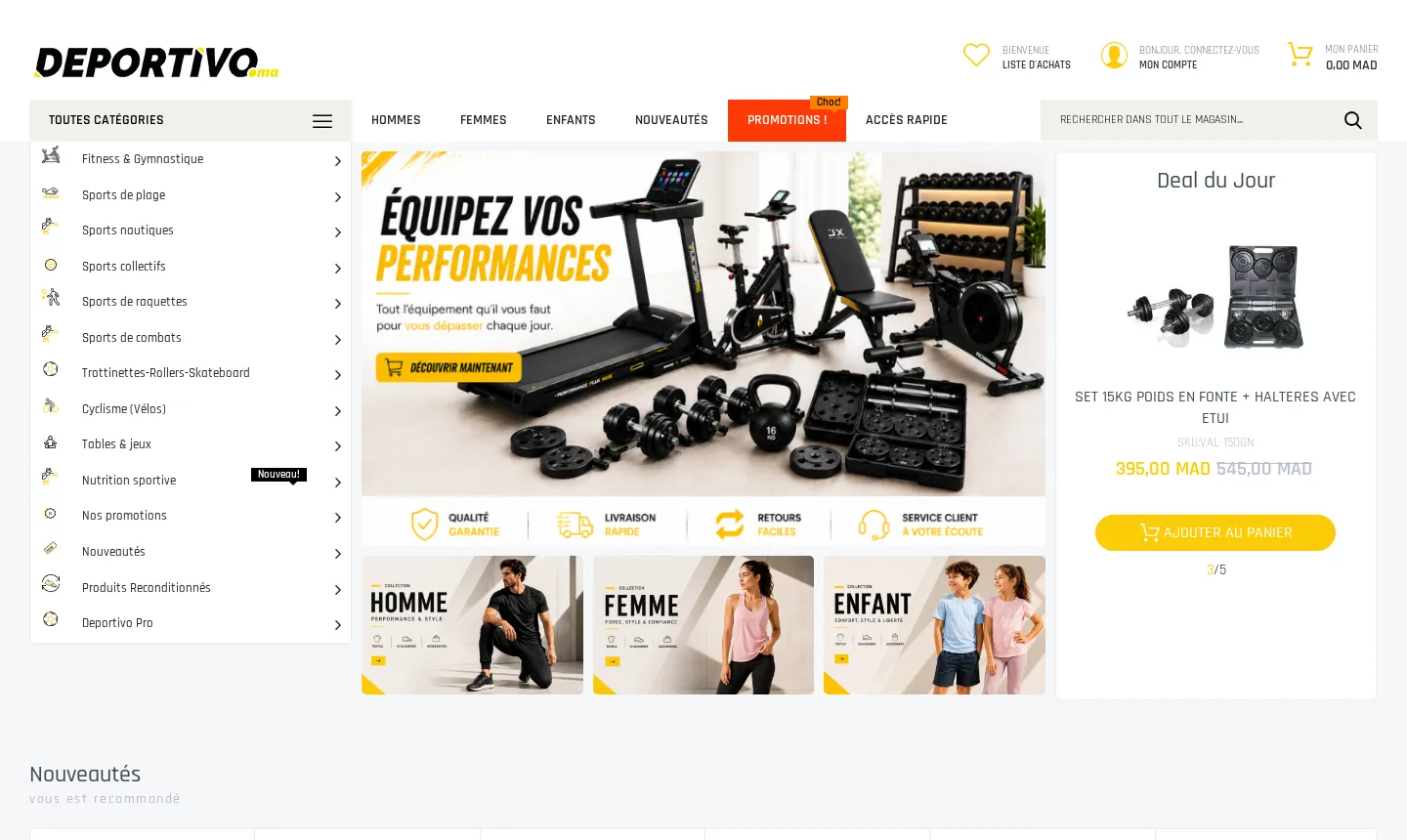
  • www.deportivo.ma
    Deportivo website built by Blue Digital
    DeportivoMulti-brand Magento sports storeVisit the site
  • www.youpi.co.ma
    Youpi website built by Blue Digital
    YoupiMagento toy and games storeVisit the site
  • www.yves-rocher.ma
    Yves Rocher Maroc website built by Blue Digital
    Yves Rocher MarocMagento store, cosmeticsVisit the site
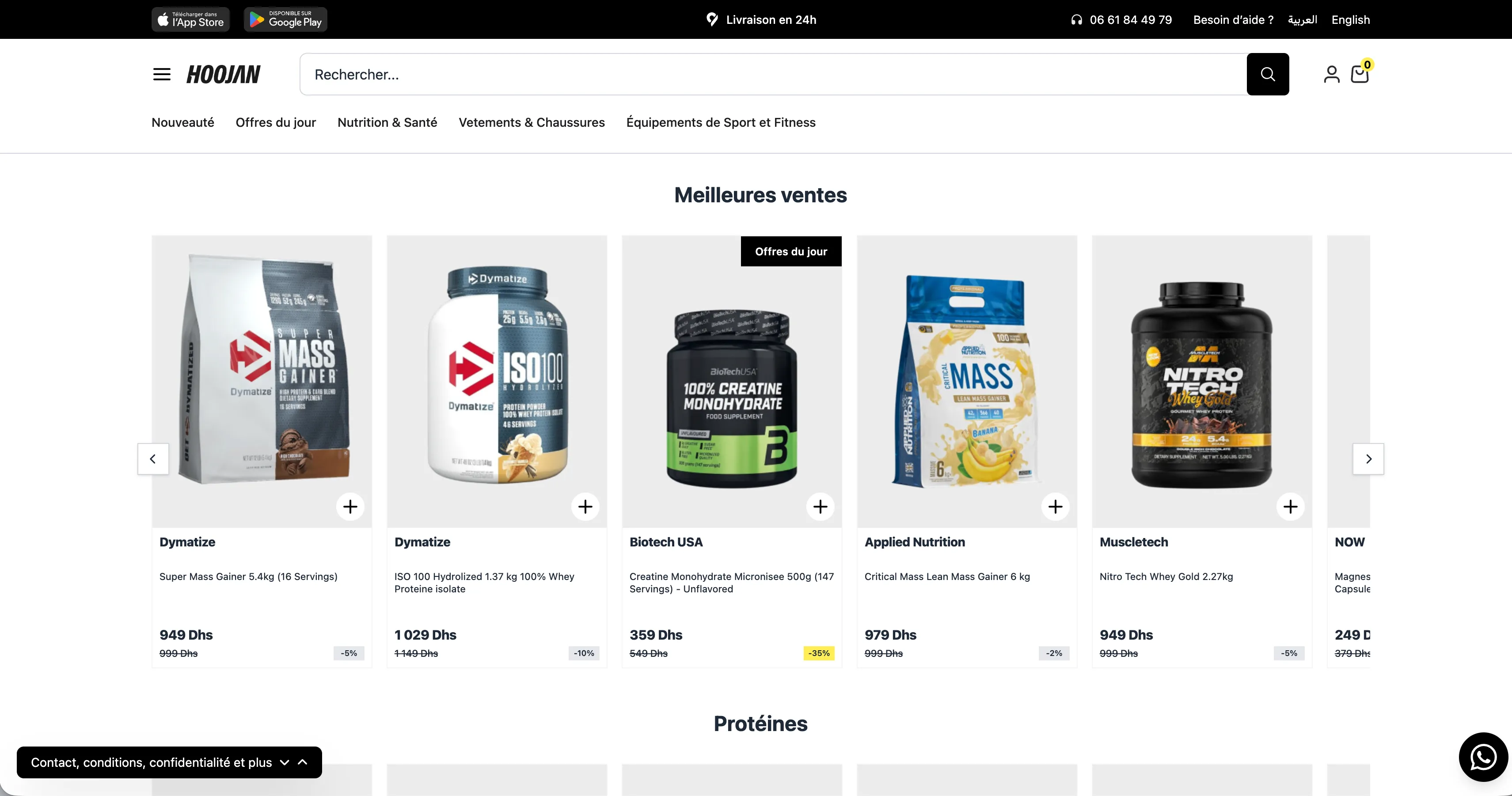
  • hoojan.com
    Hoojan website built by Blue Digital
    HoojanSports nutrition and fitness equipment storeVisit the site

Brands that trusted us with their platforms

Also Banque Populaire, BMCE Bank, Wafasalaf, Damane Cash, Total, Yves Rocher…

  • bestinvest
  • bestmark
  • caftan
  • cobuwork
  • delichef
  • goprot
  • iadvertiz
  • imatjar
  • jaguar
  • lafourniture
  • ma jardinet
  • maison des dunes
  • naos
  • pure morocco
  • yves rocher

Why software projects go off the rails

A project doesn’t become difficult overnight. It drifts through small decisions: an update put off, a test never written, a manual release done “just this once”. As long as the original developer is around, it holds together, because they know where the traps are. The day they leave, or stop answering, that knowledge leaves with them.

The result is almost always the same, whatever the technology: ageing dependencies, no tests, a fragile deployment and access that isn’t in your name. The good news is that these problems can be measured. A serious audit lists them, ranks them by severity and says what each one costs.

Take over rather than rewrite, most of the time

It is tempting to throw everything away and start again. Sometimes that is the right call, but it is rarely the first one to make. A full rewrite also rebuilds everything that worked, creates new bugs and pushes back by months the moment your users see an improvement.

Our approach is gradual:

  • Understand first: read the code, add logging, write tests on what matters before changing anything.
  • Then secure: recover access, verify backups, fix known vulnerabilities, make deployment reliable.
  • Modernise piece by piece: upgrade versions step by step, rebuild the most fragile parts, keep the rest.
  • Ship continuously: short iterations with a demo, so the project visibly moves forward again.

What you have in hand after the audit

A written report that a manager and a developer can both read: the real state of the project, ranked risks, costed options and a takeover plan. The document is yours. You can hand the next steps to us, to your own team or to another provider. Either way, you are no longer working blind.

Frequently asked questions

Question not listed? Ask it directly: a developer answers, not a call centre.

Which technologies do you take over?

Node.js and TypeScript, JavaScript with React, Next.js or Vue.js, PHP with Laravel or Symfony, Java with Spring Boot, and Python. If your project uses something else, describe it: we will tell you honestly whether we can take it over.

Do we have to rewrite everything?

Rarely. In most cases a large part of the code works and is worth keeping. The audit shows what needs fixing, what can be rebuilt piece by piece, and what justifies a rewrite. You choose knowing the cost of each option.

How much does a takeover cost?

It starts with a fixed-price audit, quoted before we begin. The next steps are quoted at a fixed price, in iterations, after the audit. As with all our projects: a 10–15% deposit to start, the balance after a live demo.

Our former contractor won't hand over access. What can we do?

We help you list what belongs to you and recover it: code repository, hosting, domain name, cloud accounts. When the host or registrar is contacted directly, they usually ask for proof that you are the contract holder.

Our code is confidential. How do you protect it?

Access is personal and revocable, and we can sign a non-disclosure agreement before the audit. The code and documentation produced belong to you.

Can you work alongside our in-house team?

Yes. We can take over the project entirely, or strengthen your team: code reviews, testing and deployment set-up, knowledge transfer.

How long before the project moves again?

It depends on the state of the code and access. The timeline is set out in the audit report, with the securing actions first.

What if the project isn't worth taking over?

We tell you in the audit, with our reasons and an estimate of the alternative. You keep the report whatever you decide.

Describe your project. We'll tell you what we can do with it.

A developer reads your request and calls you back within 2 business hours.

  • Pay on delivery: 10–15% deposit to start.
  • Live demo of the result before the final payment.
  • A direct technical contact, not a call centre.

Faster: talk to us directly

Monday to Friday, 9 am – 6 pm (GMT+1)

Urgency